• To ensure you get the most out of your CIN membership and stay connected with the latest updates, we are asking all members to update their community profiles. Please take a few moments to log in and: • Complete all sections of your profile • Review your current information for accuracy • Enter an alternative email address if desired (CIN requires your valid business email address for your training organization). Keeping your profile up to date helps us better serve you, ensures your account is correctly linked with CompTIA’s CRM, streamlines processes, enhances communication, and guarantees you never miss out on valuable CIN opportunities. Thank you for taking this important step! step!

Holding AI Accountable

Mr. Pierce mentioned in his CIN TTT AI Essentials course the idea of holding LLMs responsible.

Here is an interesting legal suit that will set some legal precedent --


OpenAI, Microsoft face wrongful death lawsuit over ‘paranoid delusions’ that led former tech worker into murder-suicide​

 
Yeah, those that know me, know that I'm not the biggest fan of Skynet. There are definitely some things in the AI world that are making people defer to it, rather that traditional methods of getting help. However, to me, this seems much like blaming the screwdriver manufacturer for injury because the person stuck the tool in his eye, blaming the fork for obesity, and so forth.

There is a societal epidemic with regards to mental health. That much is so true these days. And while I don't want to get into a long dialogue about mental health, I would often wonder, where was the person's family - since now, they are seeking damages in what they are trying to make as a wrongful death suit. How concerned were they about their own family member who may have been exhibiting signs of paranoid delusion?

One might argue the topics of explainable vs. non-explainable models with respect to AI, but this article seemed to omit any details about Soelberg's (and family)'s responsibility in all this. Is there personal responsibility to be had with respect to human interaction with AI - or is this another example of the woman blaming McDonalds for burns to her lap from spilling hot coffee on it, just because the cup didn't say 'hot'?

 
Yeah, those that know me, know that I'm not the biggest fan of Skynet. There are definitely some things in the AI world that are making people defer to it, rather that traditional methods of getting help. However, to me, this seems much like blaming the screwdriver manufacturer for injury because the person stuck the tool in his eye, blaming the fork for obesity, and so forth.

There is a societal epidemic with regards to mental health. That much is so true these days. And while I don't want to get into a long dialogue about mental health, I would often wonder, where was the person's family - since now, they are seeking damages in what they are trying to make as a wrongful death suit. How concerned were they about their own family member who may have been exhibiting signs of paranoid delusion?

One might argue the topics of explainable vs. non-explainable models with respect to AI, but this article seemed to omit any details about Soelberg's (and family)'s responsibility in all this. Is there personal responsibility to be had with respect to human interaction with AI - or is this another example of the woman blaming McDonalds for burns to her lap from spilling hot coffee on it, just because the cup didn't say 'hot'?
From a legal argument perspective, a "reasonable person" understands that coffee is hot without a warning label, but does that same "reasonable person" understand that what AI regurgitates is not thought or consciousness? Obviously in this instance, the person involved would not be considered rational in thought, so should there be safeguards in place to prevent them from accessing such systems? What about minors? All great and reasonable discussions I think. Glad I am just a lowly instructor and I don't need to answer any of the questions I ask!
 
@Rick Butler and @Andrew H these are good points. I agree a "reasonable person" should not need a warning label about hot coffee. But we find ourselves in a society where we need warning labels for everything (that's a whole other topic).

It is an interesting time we find ourselves interacting with AI. I happened to catch a 60 Minutes story this past Sunday (it was on between football games) about kids interacting with Character AI, a chatbot platform that is currently at the center of a lawsuit where a family is stating that their daughter's interaction with the platform led her down a path where she finally committed suicide.

There have been similar conversations around other forms of social media platforms that can be used for good, and also negative ways, especially with younger audiences. I agree with Ricks commment asking where are the other family members throughout this experience.

I do feel that AI is a powerful tool, and we as instructors play a key role in helping folks understand what AI is and what it is not. We can help be that warning label for AI. Getting folks to understand that if we need to verify infomration AI provides us for school or work, why would we let AI make us feel bad about ourselves!
 
I think that trying to hold AI accountable for how people use it would be about as effective in practice as trying to quiet a room full of toddlers by whispering ‘shhh.’ Encouraging responsible use of AI through education is likely our best shot at avoiding tragedies.

To do my part, I walk from classroom to classroom in the college and peer in the window with a stern and judgmental expression while holding this book: https://triosdevelopers.com/jason.eckert/stuff/ai_ethics.jpg

It seems to be working...
 
  • Like
Reactions: Stephen Schneiter
From a legal argument perspective, a "reasonable person" understands that coffee is hot without a warning label, but does that same "reasonable person" understand that what AI regurgitates is not thought or consciousness?
Reasonable, to me, is one of these very subjective terms that seems to get pulled back and forth, based on monetary stake. Yes, there are weirdos out there who actually *like* cold coffee, but I'm at least smart enough to not jam a screwdriver in my eye and think it's Craftsman's fault if I do it anyway.

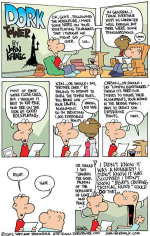
I submit this lighthearted point about...consequences...

1765474188802.png

so should there be safeguards in place to prevent them from accessing such systems? What about minors?
Safeguards...and minors. I would as Meta about that - and one of the principal reasons why you'll NEVER see me on Facebook. Meanwhile, I could always pop that can of worms about Australia's ban on social media for kids below the age of 16.
I agree with Ricks commment asking where are the other family members throughout this experience.
I remember back at a previous Partner Summit where CompTIA brought in Kara Swisher who railed on the big tech companies about child safety and all I could do between...shall we say...colorful metaphors grumbled quietly to myself...was, "where are the parents in this equation"? Yeah, big tech has a measure of culpability here, but there is a grand thing called parenting that seems to be missing, as kiddos find their way out to Club Penguin and Roblox, where all the creepers await.
To do my part, I walk from classroom to classroom in the college and peer in the window with a stern and judgmental expression while holding this book: https://triosdevelopers.com/jason.eckert/stuff/ai_ethics.jpg

It seems to be working...
Sorry man, but the only thing I can see is the "dome", buddy. I dare say, they are not seeing the title of the book...just...the...dome.